
I left Ribeirão Preto shortly after three in the morning on a Saturday, heading to Tapiraí, in the countryside of São Paulo. A few days earlier, a local guide had sent me a message saying that he had been seeing Atlantic Royal Flycatchers in the area.
That was reason enough to face nearly five hours on the road.
Tapiraí lies in a region with large areas of preserved Atlantic Forest. Around 80% of the municipality is within an Environmental Protection Area, and part of Legado das Águas also lies within its boundaries. Covering 31,000 hectares across Tapiraí, Miracatu and Juquiá, Legado is considered the largest private Atlantic Forest reserve in Brazil.
The Atlantic Forest has a particular familiarity for me. I spent much of my life visiting my family's beach house on the northern coast of São Paulo state. It is a forest I have known since childhood and one I always enjoy returning to.
That morning, we had two locations where the birds had been observed.
We parked the car and entered the forest. We did not walk for long — perhaps less than half an hour — passing streams, small waterfalls and vegetation still damp from the early morning.
Walking through the Atlantic Forest at the beginning of the day is a fantastic experience. The moisture still clinging to the vegetation, the sounds of animals beginning their day and the first rays of sunlight filtering through the forest are worth it on their own.
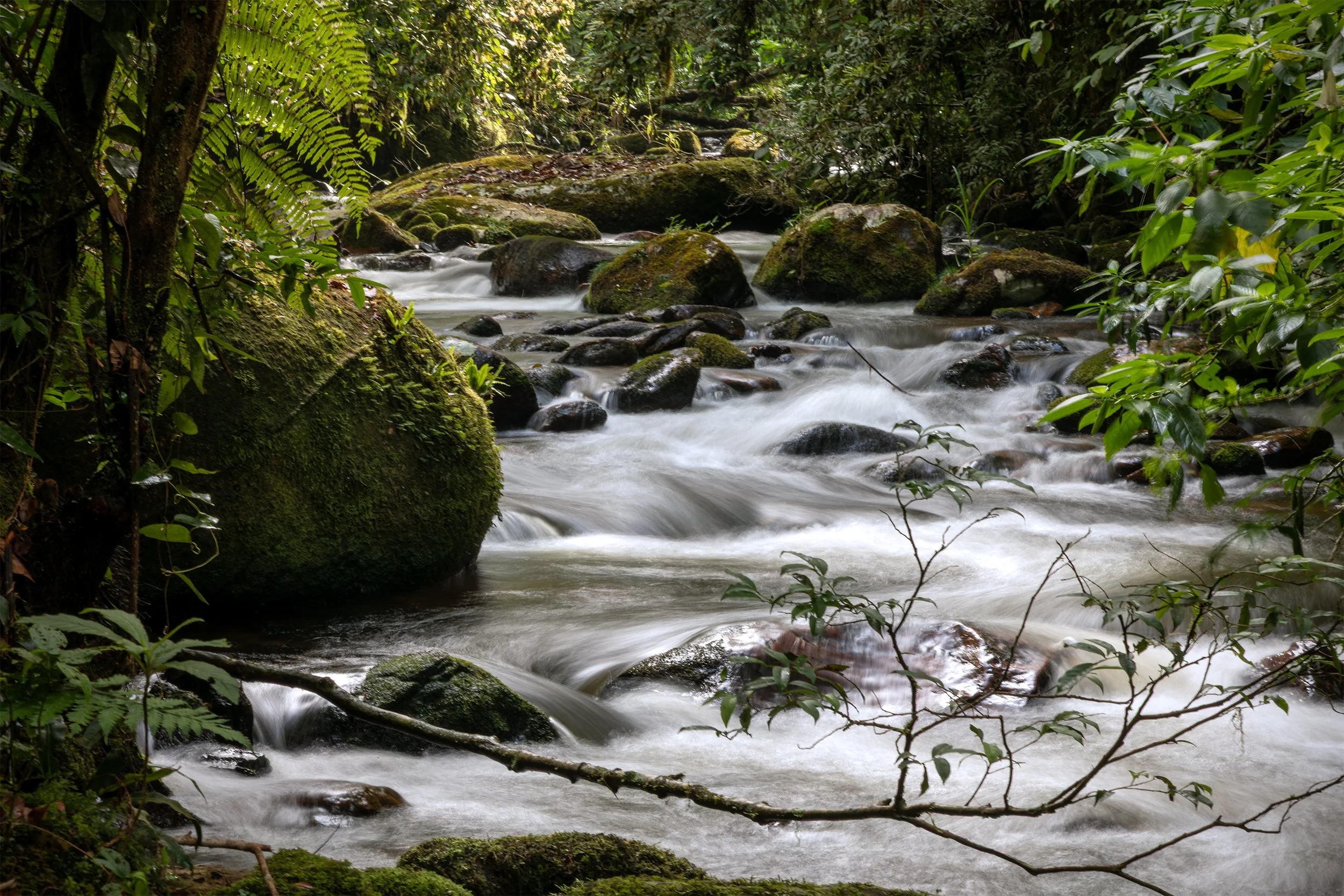
At the first location, we spotted a male perched on a branch near a stream. The forest was relatively dense, and very little light reached the place where the bird was perched.
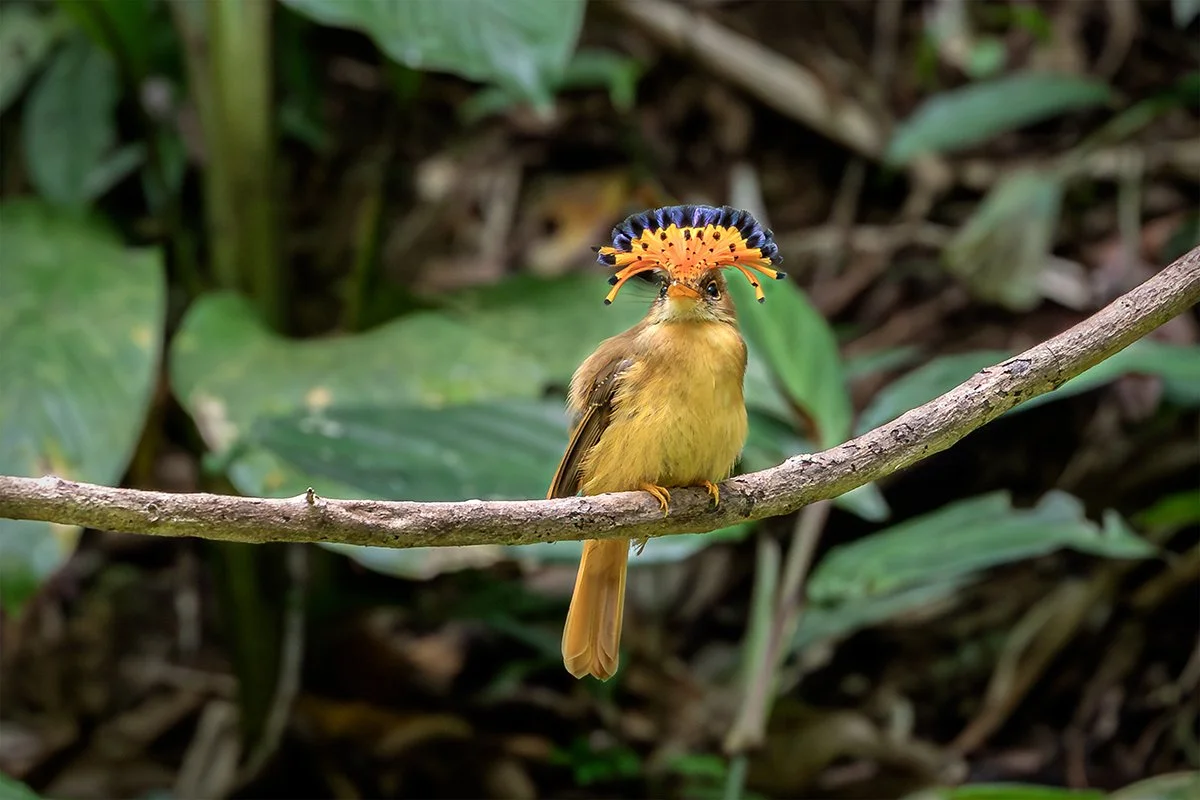
The Atlantic Royal Flycatcher (Onychorhynchus swainsoni) is endemic to Brazil's Atlantic Forest. It measures between 16 and 17.5 centimeters and is best known for its large erectile crest, which gives the bird its popular name. Most of the time the crest remains closed, but when it opens, it forms a very distinctive fan of colors.
Nests Above the Streams
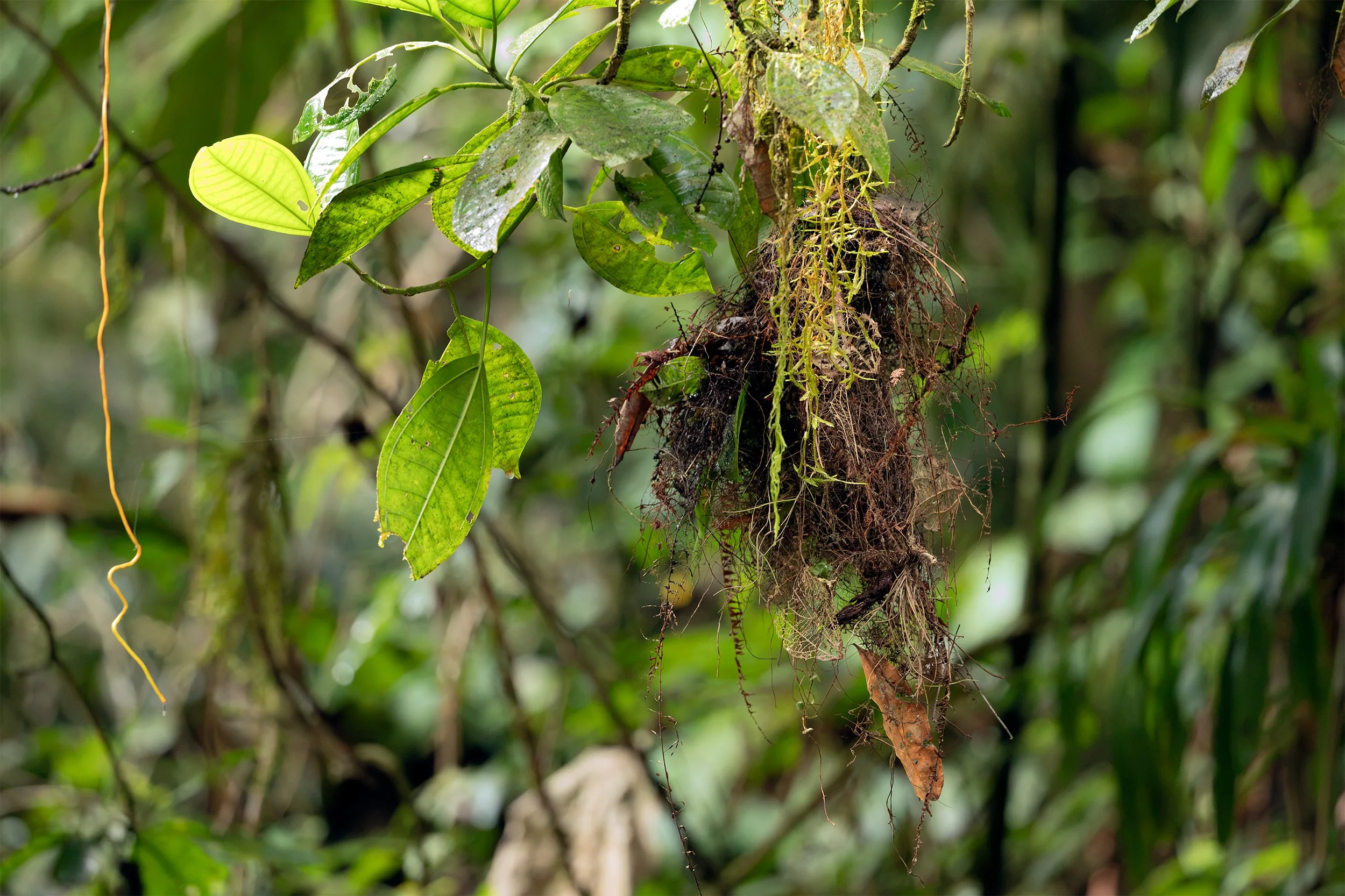
The nest of the Atlantic Royal Flycatcher is also quite distinctive. It is elongated and pendulous, built from plant fibers, roots, leaves and mosses, and usually suspended from the end of branches above streams inside the forest.
Its relationship with water does not appear to be accidental.
A study conducted over five breeding seasons found 23 nests of the species. All of them were built above water. Researchers also found that the birds selected particular streams and, within those streams, specific places to build their nests.
The structure has a lateral entrance, while the chamber where the eggs and chicks remain is located in the lower part of the nest.
I managed to make a few photographs with the crest open, but I still did not have the image I had left Ribeirão Preto hoping to make.
We returned to the car and headed to the second location.
That region also helps explain why it is still possible to find a species so dependent on preserved forest. Legado das Águas, formally established in 2012 on land acquired by Votorantim beginning in the 1940s for the construction of hydroelectric power plants, today protects 31,000 hectares of Atlantic Forest and supports conservation, scientific research, native species production and ecotourism.
Four Hours Waiting for a Few Seconds
Atlantic royal flycatcher perched on a branch while hunting insects in the Atlantic Forest, Brazil.
The second location offered better conditions. The environment was similar, including another nest above the water, but there was less vegetation blocking the light.
There we found another pair, and that was where we remained for the next few hours.
Photographing an Atlantic Royal Flycatcher with its crest open requires attention and observation because, most of the time, the fan remains closed. When the bird decides to open it, it lasts only a few seconds.
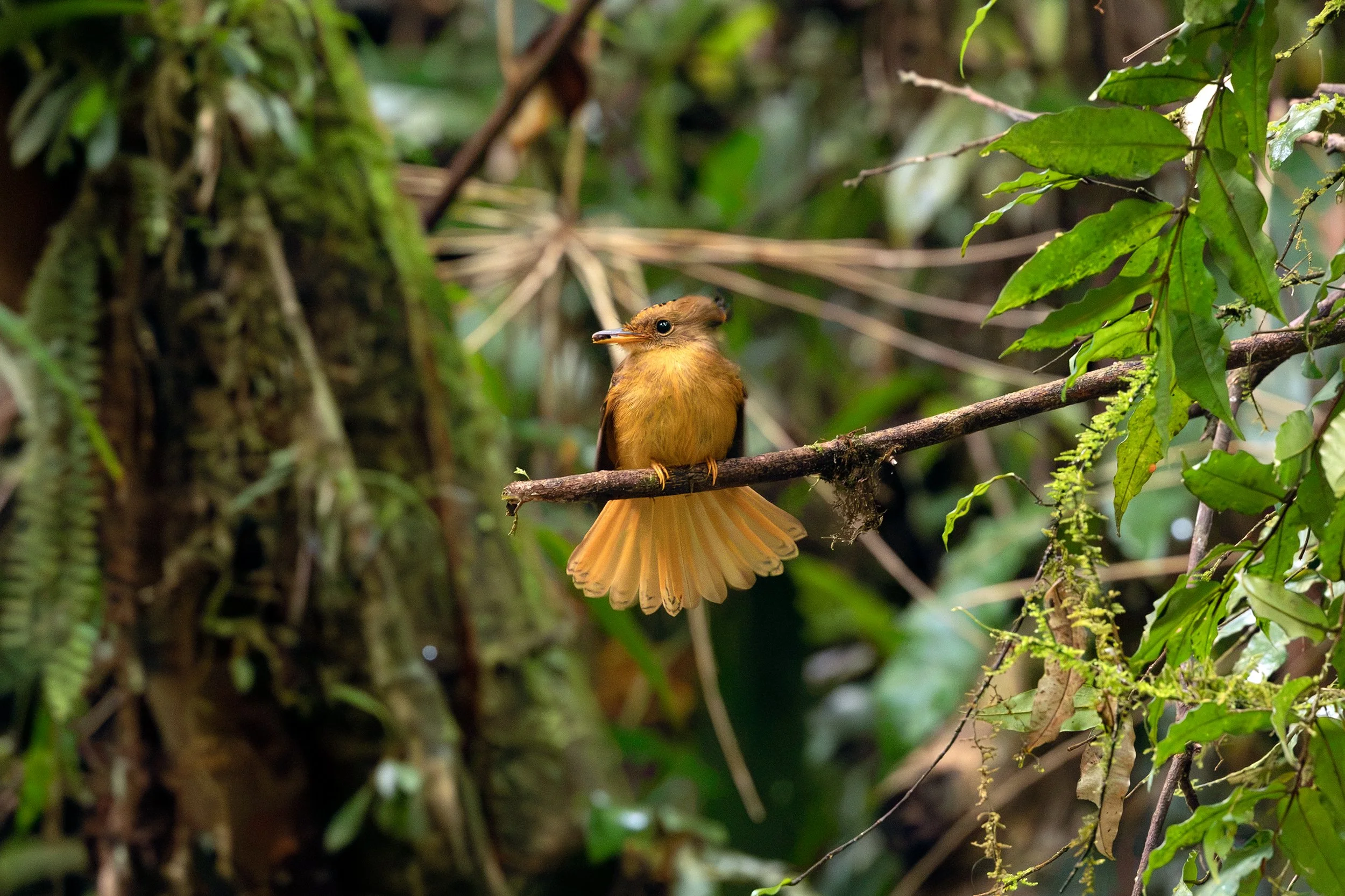
We kept our distance and allowed the birds to continue behaving normally. The photograph depended on observing, recognizing their movements and waiting.
After some time, I began to notice a sequence of movements the female made before some of these displays.
She would open her bill, run it through her feathers, move her body and give herself a kind of shake. That was the moment to pay closer attention because the crest might open next.
The problem was that she repeated exactly the same behavior several times without opening it at all.
So I had to keep watching... and photographing.
We spent almost four hours standing there, practically the entire time with my eye on the camera's viewfinder. At every sign, I pressed the shutter. Many times she simply arranged her feathers and remained perched. At others, she changed position or moved to another branch.
By the end of that period, I had approximately 2,600 photographs on the card. The female had opened her crest three times. On two of those occasions she was facing me almost directly, with the fan completely open.
Those were the photographs I had gone there to make.
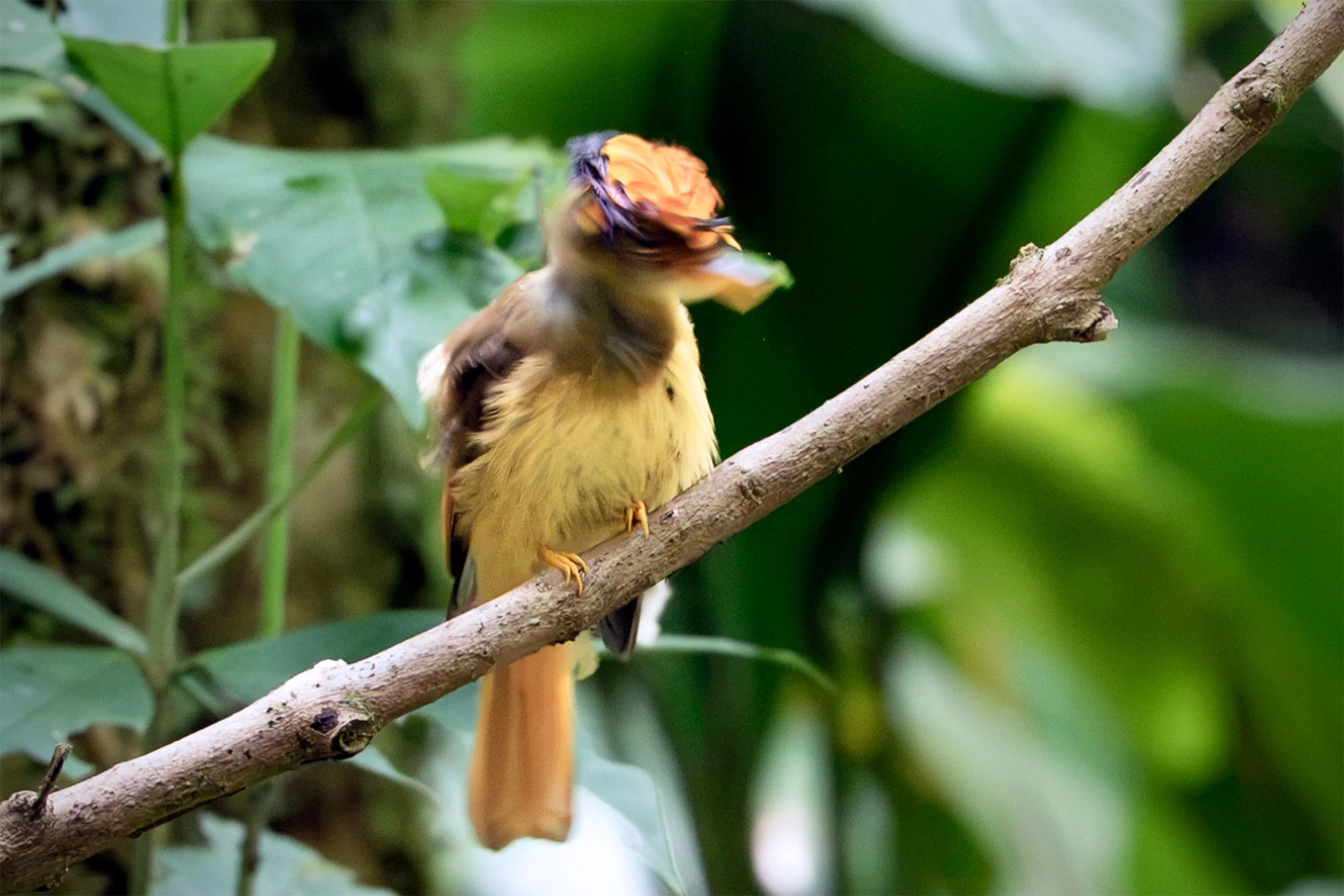
The hours spent observing the birds also gave us time to carefully observe the surrounding environment. The Atlantic Royal Flycatcher depends on large, well-preserved forest areas and has a very specific relationship with the streams it uses for breeding. Studies of the species point to the specialization of its nesting habitat and its absence from fragmented environments as important issues for its conservation.
In that sense, Tapiraí is part of a region where the persistence of large areas of Atlantic Forest still provides the conditions for species like this to continue living and breeding.
Wildlife photography often works this way. The time spent observing is usually much longer than the time in which something actually happens in front of the camera.
In this case, almost four hours of waiting were concentrated into intervals of just a few seconds.
After almost four hours in the same place, I got back into the car, put on some good music and began the nearly five-hour drive home.
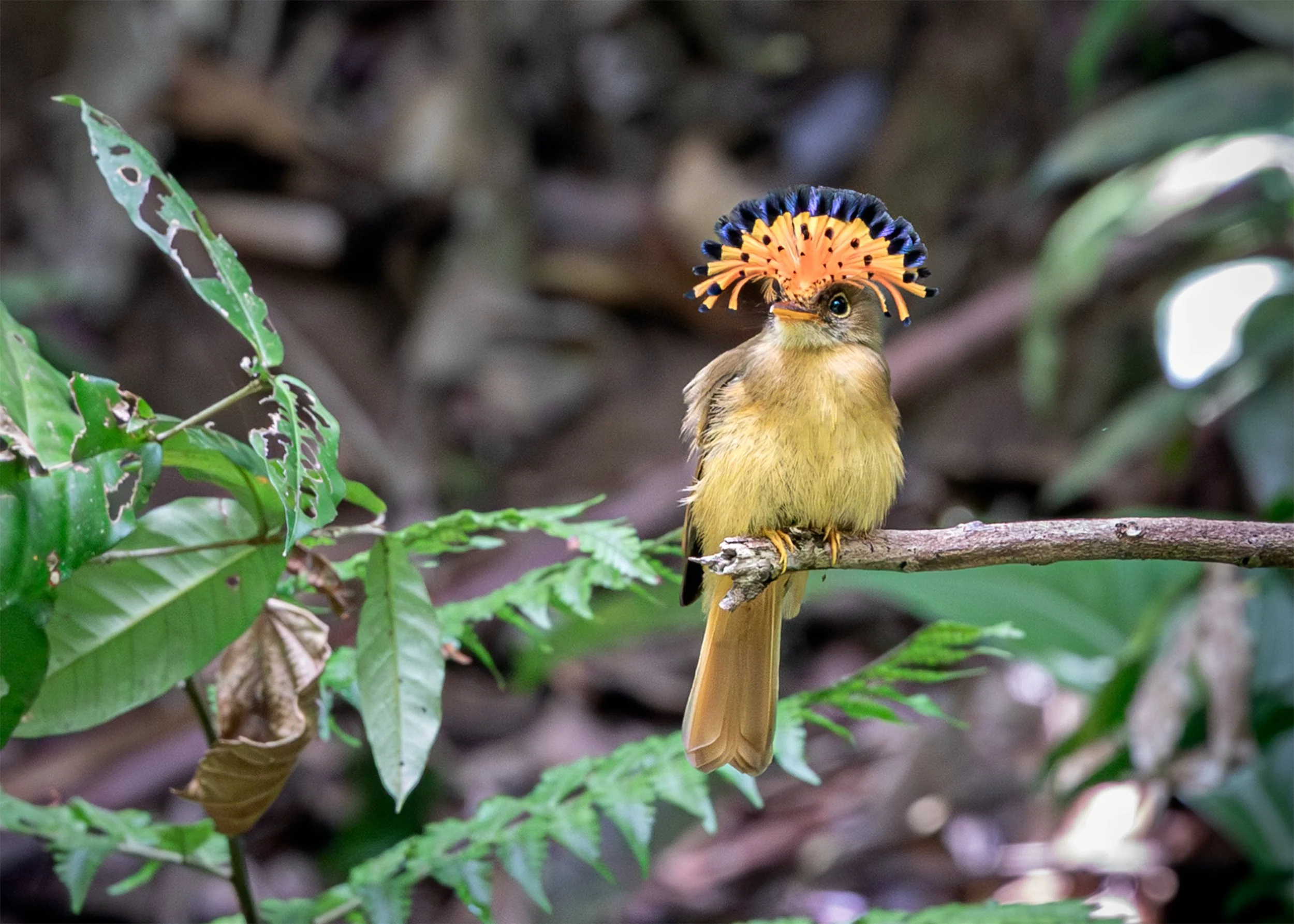
There were around 2,600 photographs on the card.
And among them were the two images I had gone there to make.
For collaborations, press or image licensing, get in touch — and follow the day-to-day in the field on Instagram @alexandre_rago.
