
Ousado A Story of Survival in the Pantanal
In August 2024, I set out from Ribeirão Preto with a childhood friend on a photography trip to the Pantanal. We were headed for Porto Jofre, in the Northern Pantanal, where we'd be staying at a lodge on the banks of the São Lourenço River.
The drive itself was part of the experience we were after. There was no rush to get there. We wanted to take our time on the Transpantaneira, soaking in the scenery, looking for wildlife and photographing whatever we came across along the way.
The road, with more than 120 bridges, cuts through a remarkable variety of habitats. Along the way, we spotted caimans, capybaras, marsh deer and an incredible variety of birds. Every stretch gave us a new reason to stop, watch and shoot. The road alone made a good part of the trip worthwhile.
It took us about eight hours to cover the roughly 150 kilometers between Poconé and Porto Jofre, a drive that would normally take far less time.
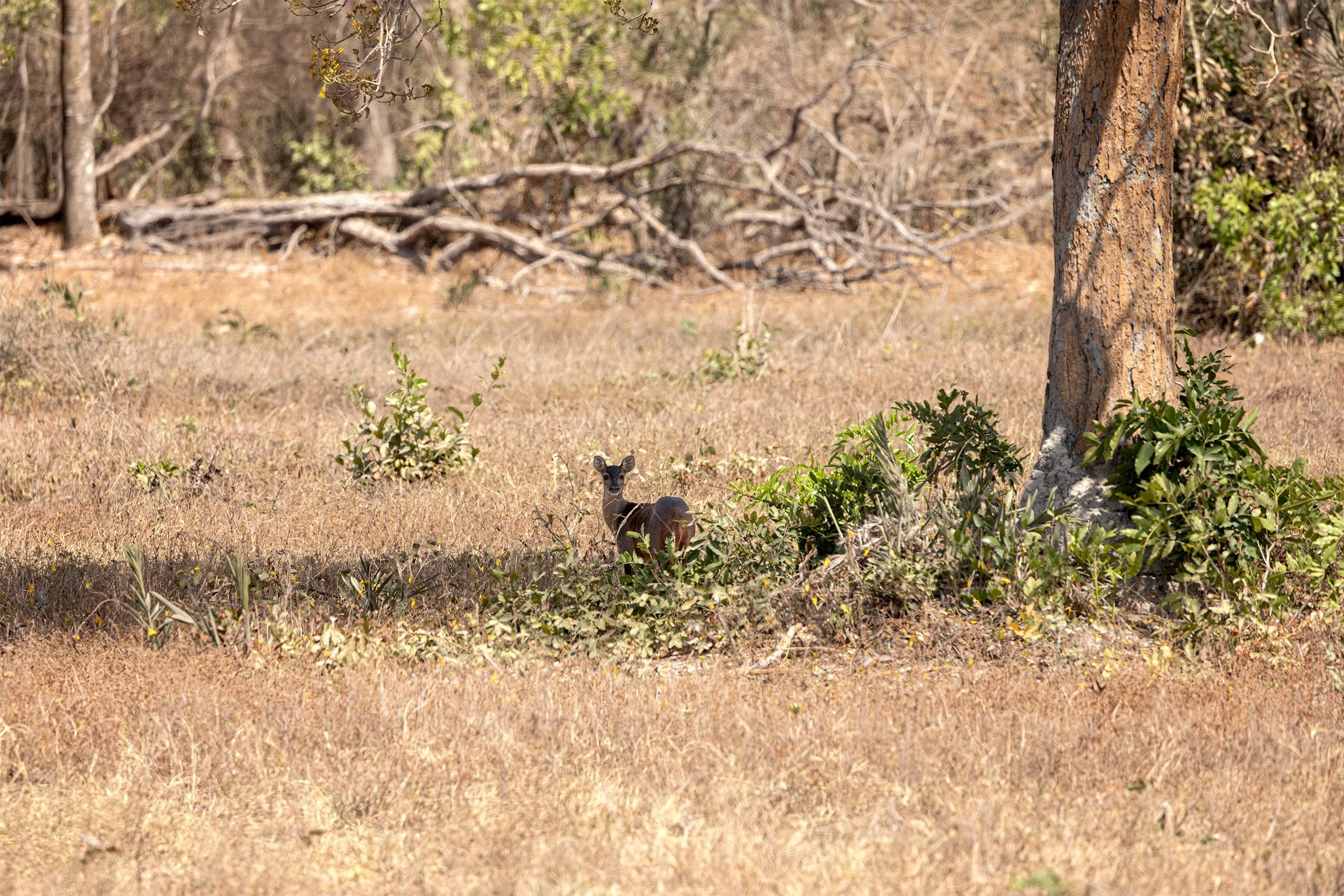
We reached Porto Jofre after a full day on the Transpantaneira. And the part of the trip we'd been looking forward to most was still ahead of us.
Our itinerary included three boat outings on the region's rivers, in the hope of finding and photographing the wildlife of the Pantanal, and above all, jaguars in their natural habitat.
It was on one of these outings that we found Ousado.
Meeting Ousado
It was early in the day when we came across Ousado in one of the corixos, the seasonal side channels off the São Lourenço River.
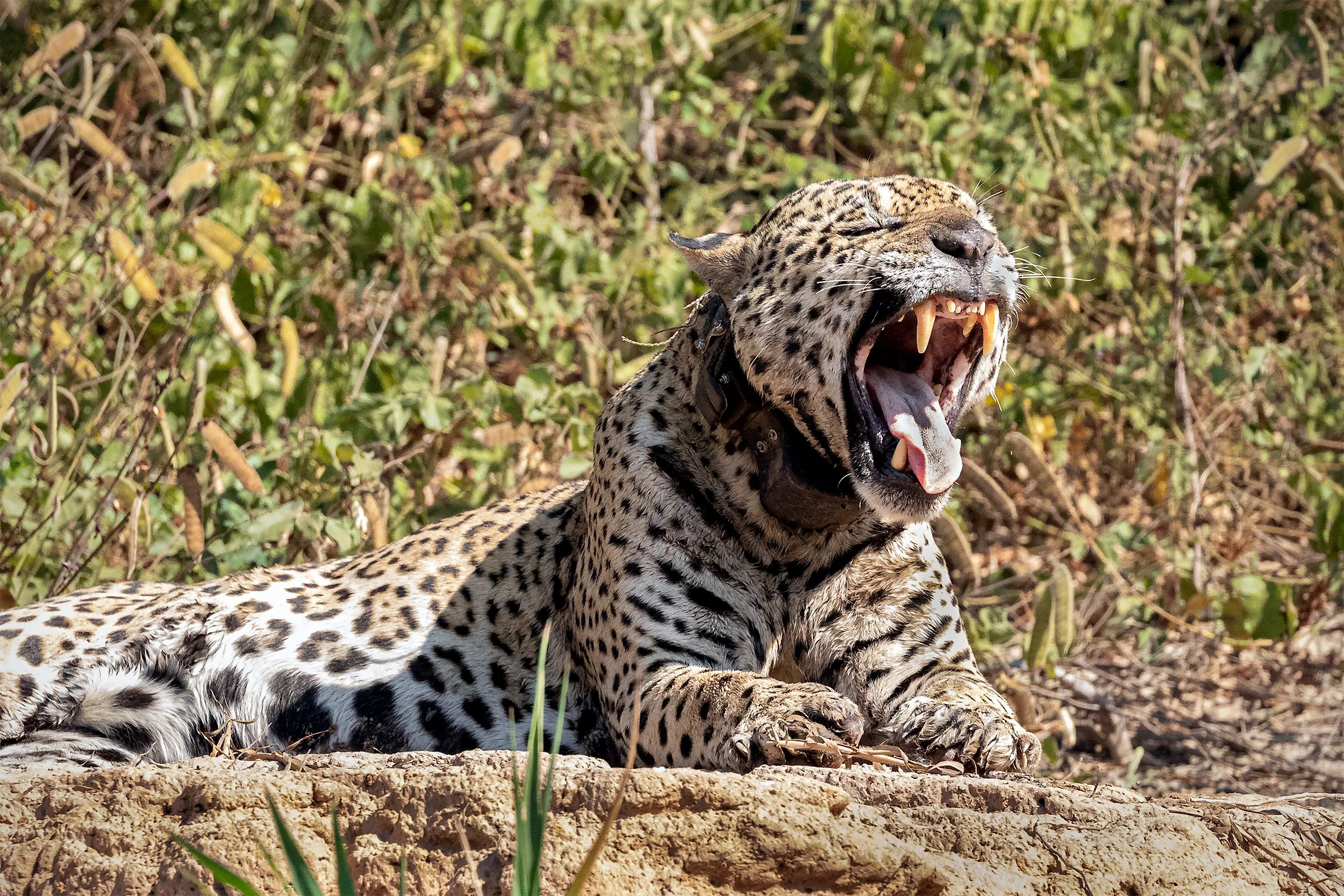
He was lying on the bank of the corixo, waking up from a nap.
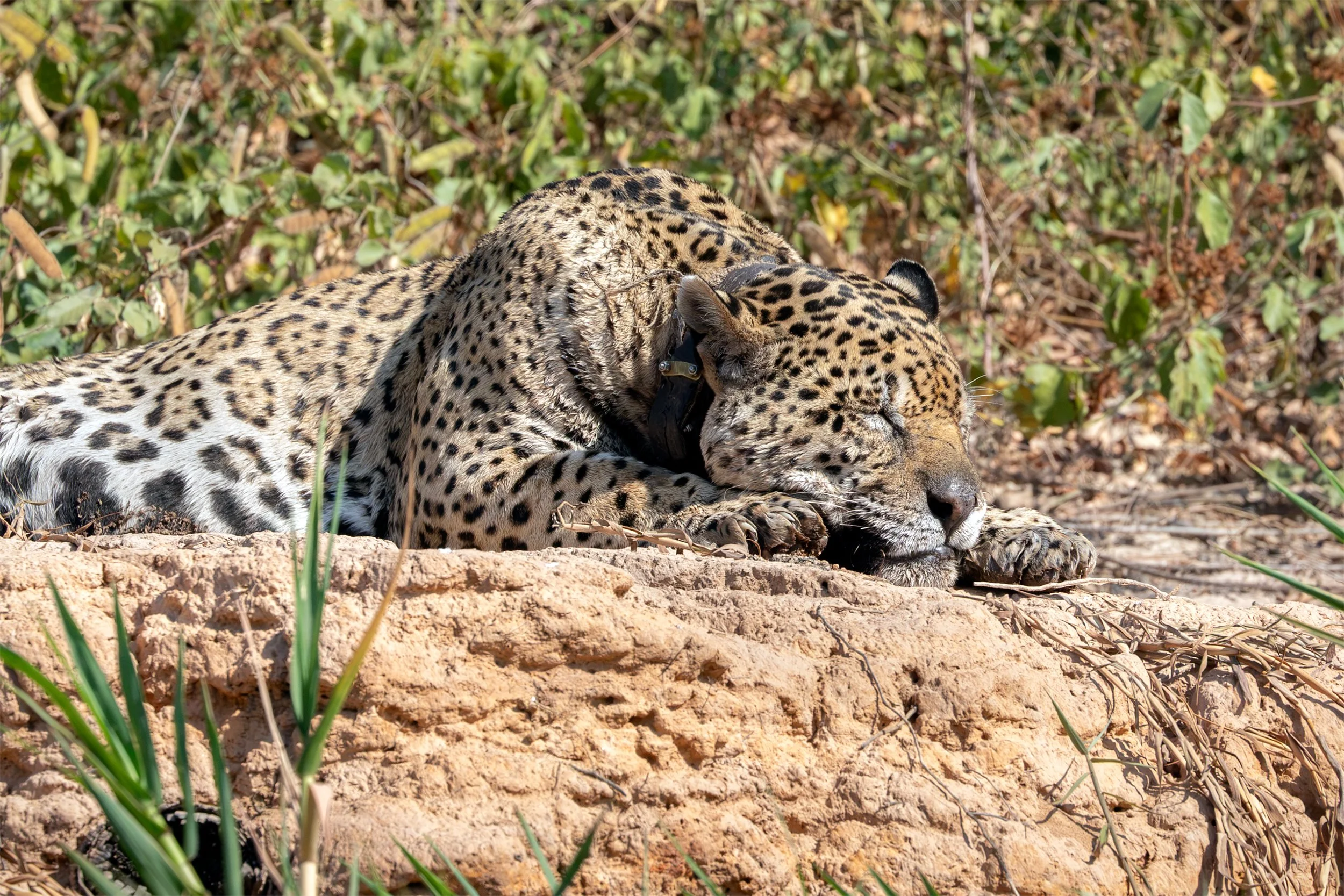
We were lucky enough to spend a good while there, watching his behavior and photographing him at our own pace. We saw him get up, walk down to the water to drink, and then slip into the river and go on his way.
It was exactly the kind of encounter we had hoped for in the Pantanal. Being able to watch a wild jaguar, follow his movements and photograph him in his own environment, without having to look for another scene or another animal, was one of the reasons I had planned that trip.
The calm of that encounter also stood in stark contrast to Ousado's story.
Four years earlier, he had been found with all four paws burned during the fires that ravaged the Pantanal in 2020. His survival would depend on a rescue operation and weeks of veterinary care.
The 2020 Fires
In 2020, the Pantanal faced one of the worst environmental crises in its history.
An extreme drought, combined with massive wildfires, swept across vast areas of the biome. Around 3.9 million hectares went up in flames, destroying habitats, feeding grounds and shelters used by countless species.
The true toll on wildlife only began to come into focus in the months that followed.
A study published in the journal Scientific Reports in December 2021 estimated that roughly 17 million vertebrates were killed directly by the 2020 fires.
Throughout the fires, firefighters, veterinarians, researchers, environmental organizations, local residents and volunteers worked to fight the flames and rescue injured animals.
Many had severe burns, especially on their paws, from crossing areas that were still hot or walking over scorched ground.
It was against this backdrop that Ousado was found.
Rescue and Recovery
On September 11, 2020, a news crew from the newspaper O Estado de S. Paulo, covering the fires in the Pantanal, found Ousado in a weakened state on the banks of the Corixo Negro River, near Poconé, in Mato Grosso.
The animal, a young male, had burns on all four paws and needed veterinary care.
After the rescue, he was taken for specialized treatment.
Part of his recovery took place at Instituto NEX, an organization dedicated to the conservation and care of big cats, located in Corumbá de Goiás.
His care combined close veterinary monitoring with regenerative medicine techniques, among them stem cell therapy.
He recovered well enough for the team in charge of his care to clear him for release back into the wild.
On October 20, 2020, after 39 days away from the Pantanal, Ousado was returned to the same stretch of the Corixo Negro River where he had been found.
The release operation involved a journey of about 1,200 kilometers, followed by a boat trip to the site chosen for his reintroduction.
Ousado was fitted with a GPS tracking collar, allowing researchers to follow his movements and monitor how he readjusted to life in the wild.
His recovery would not have been possible without the combined efforts of the people and institutions involved in his rescue, transport, treatment and release.
His case also shows how important it is to have the right infrastructure in place to respond to environmental emergencies on this scale.
Finding an injured animal in a vast, hard-to-reach region, transporting it safely, providing specialized care and assessing whether it is fit to return to the wild all take trained professionals, equipment and funding.
Ousado had access to that support, and he survived.
His rescue was just one of many operations carried out during the fires. Human effort was crucial to his recovery, just as it remains essential to protecting the habitats he depends on.
An Unusual Hunting Technique
Ousado also became known for a particularly striking hunting behavior: approaching caimans from underwater.
Jaguars are excellent swimmers, and preying on caimans is well-documented behavior for the species in the Pantanal. They are often seen walking along riverbanks, searching for prey and using the vegetation as cover to get close before they strike.
But Ousado has another strategy as well.
On some hunts, he enters the water and dives to approach caimans without being seen from the surface. Once he's within striking distance, he surfaces right beside his prey and attacks.
The Pantanal We Found in 2024
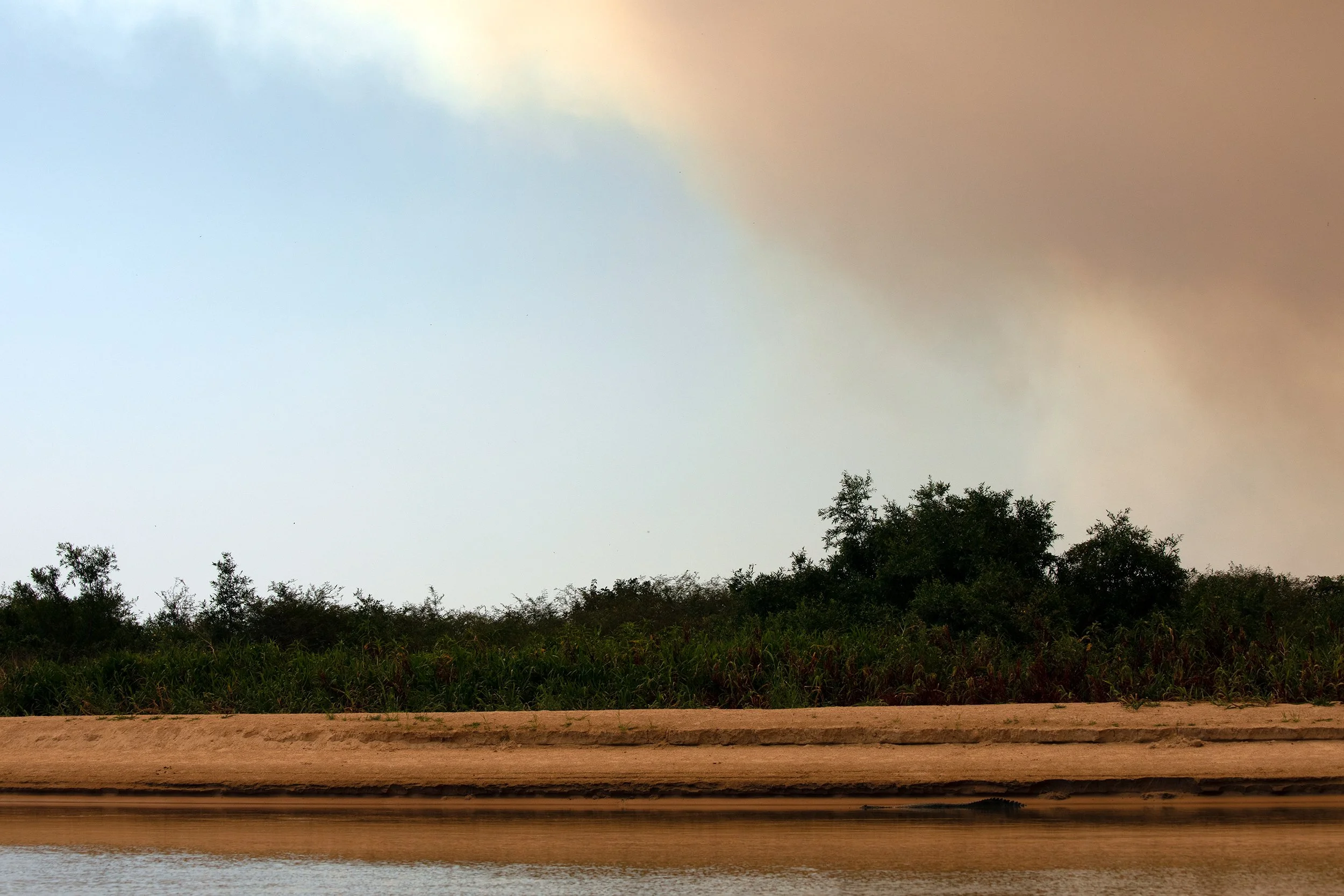
When we made our trip in August 2024, the Pantanal was once again facing an alarming fire season.
According to MapBiomas, around 468,000 hectares had burned in the first half of that year alone. June accounted for most of that area, with roughly 370,000 hectares burned.
It was clear that the problems of 2020 had not gone away.
The fires also directly affect local communities, who depend on the rivers, the vegetation, other natural resources and tourism for their work and their livelihoods.
Our own experience was only possible thanks to the infrastructure and expertise of the professionals who work in the region.
We spent entire days on rivers and corixos and along vegetated banks, getting to know a small part of the Pantanal's biodiversity.
We came back from that trip with photographs of many different species and plenty of memories of our days driving the Transpantaneira and exploring the region's rivers.
Among them is our encounter with Ousado.
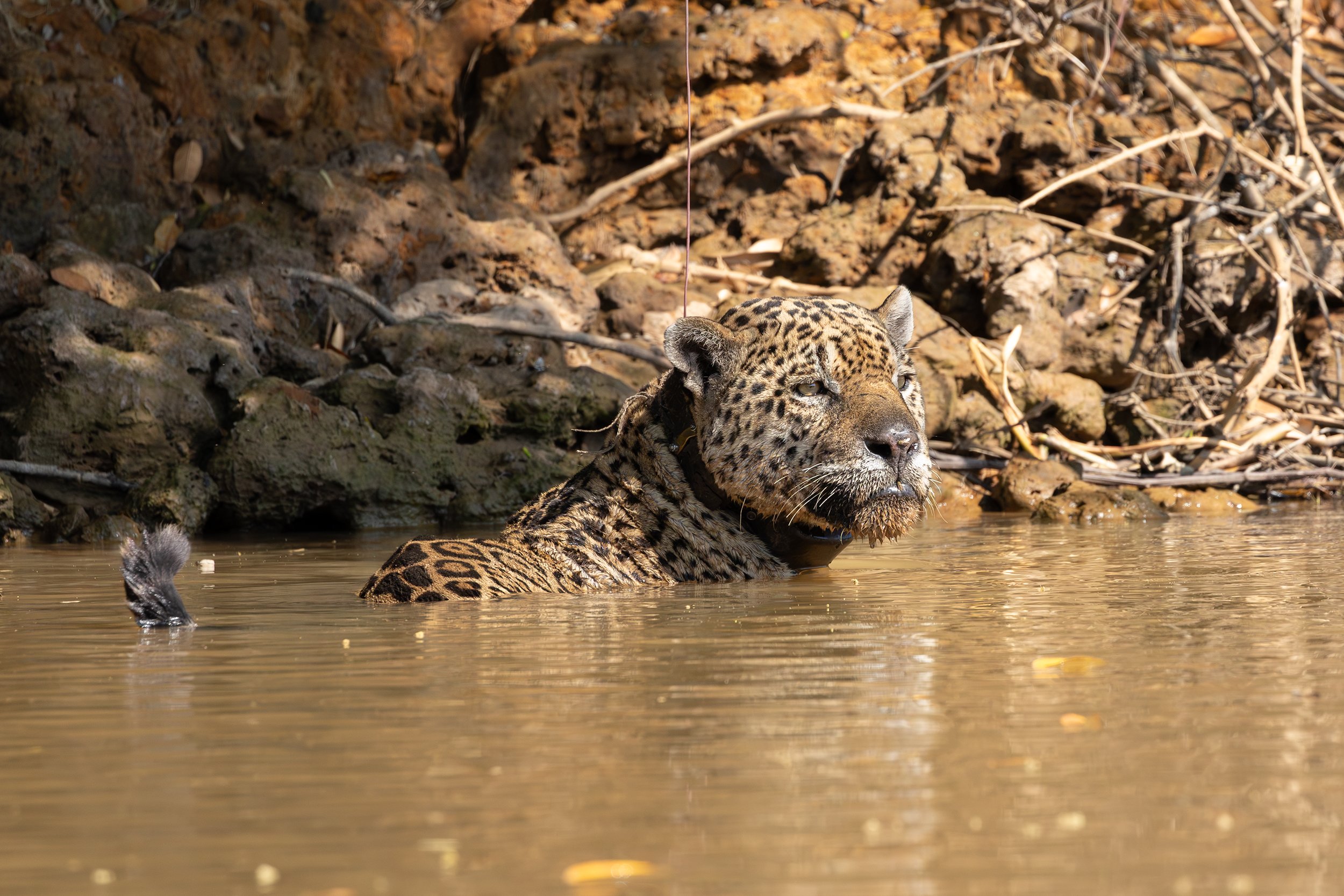
When I think back to that morning, I remember him lying at the edge of the corixo, and all the time we were able to spend there, watching him...
Those photographs are part of the memories I brought back from the trip. Ousado's story remains tied to them, as does the work of the people who made it possible for him to return to the wild.
